Monday, May 18, 2020
Tuesday, March 17, 2020
Community School Health Science
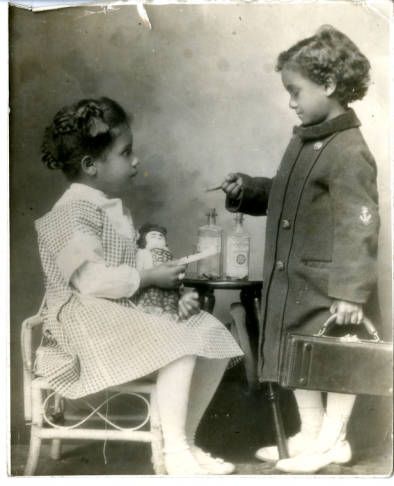
Play Doctor and learn how to:
Listen to a ❤️ heart beat, Take a temperature, Measure out pretend liquid meds using a calibrated dropper, Feel for a pulse, Create and use a handmade eye chart, Tap knees for reflexes, Create a patient chart with dates, times, symptoms and cure, Write a prescription, Make a Patient scheduling book, Fill empty containers with food coloring meds and use art supplies to make bottle labels, Learn the names and spellings for common medications like aspirin or eucalyptus. Fill your hours with imaginative medical investigations. Oh, and be sure to draw a detailed x-ray of a human body. Lots of bones to consider.
Saturday, March 14, 2020
Monday, June 17, 2019
Community School Hands On Floating Curriculum
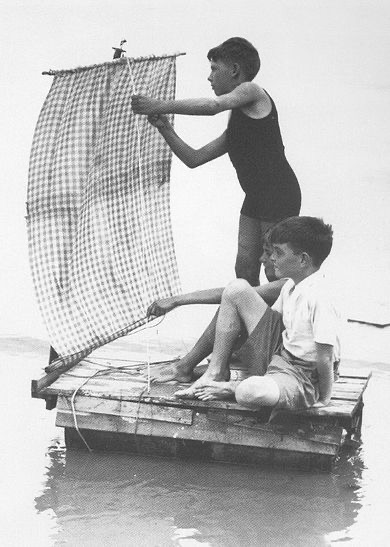
In October of 2018, a group of students began the process of building the Opti in Room 128. Under the direction of Laura Botel, the program coordinator of Brooklyn Boatworks, a nonprofit after-school program, and volunteers from the organization, the students met for two hours a week. Here, they mastered new manual skills and a new vocabulary, including words like transom, daggerboard and thwart.
Schools in Crown Heights, East New York, Harlem, Washington Heights and Woodside, also built Optis this year.
Last fall at M.S. 88, the boat building process began with four unfinished sheets of marine plywood, design plans and some basic hand tools like screwdrivers, small saws and cordless drills. The idea was to build a seaworthy boat entirely by hand and then sail it in an inlet on the East River on an appointed day, rain or shine, by the end of the school year.
The day came on June 10th. And it rained, but it happened: A small flotilla of Optis, each one of which had been built inside classrooms across the city, set sail, holding one student-builder and one adult. (It is standard procedure for Optis to be equipped with buoyancy bags, which, on this day, came in handy with the extra person on board.)
https://www.nytimes.com/2019/06/14/nyregion/optimist-sailboat-brooklyn-boatworks.html?action=click&module=Features&pgtype=Homepage
Wednesday, March 13, 2019
Community School Researchers David & Frances Hawkins


To the Water Table Frances Took: Clean detergent squeeze bottles, old plastic medicine jars, perforated berry baskets, funnels, flexible, plastic tubing of varying length and diameter, plastic medicine droppers, poultry basters, bulb ear syringe/aspirators, corks, plastic measuring cups, plastic water jugs pint, quart, gallon, mini bike pump, battery-operated fan.
Monday, July 09, 2018
Community School What It Means To Teach

There is a portraiture involving the child's style - strengths, weaknesses, skills fears, and the like. I single out one aspect of this complex, the way a child comes to grips with some subject matter, matter originally provided because it matches the general level of interest and ability of a still individually unknown group - building blocks, clay, paint, batteries and bulbs. If this subject matter represents something which the teacher has valued and learned from, and seen others learn from, then the teacher has a background for reading the behavior of that child.
In a film from Cornell University, a series of kindergarteners come spontaneously to a table to play with an equal-arm balance and a large number of washers and other weights. In watching the film, the observer begins to recognize in himself - if he is personally familiar with the large variety of balance situations which are possible here, and with some of the underlying ideas - the ability to read the levels and the specializations of interest represented in these children, no two alike.
What he finds himself doing (but only if he is acquainted with this kind of balance phenomenon and others related to it) is beginning to build what I would call a map of each child's mind and of the trajectory of his life. It is fragmentary, fallible, but it is subject always to correction. and next the observer thinks to himself, what could I do to steady, extend and deepen this engagement I have glimpsed?
The important thing is that, as in all self-instruction, the participant DOES something.
What It Means To Teach
David Hawkins
OUTLOOK
Mountain View Center For Environmental Education
12: Summer: 1974
Wednesday, June 13, 2018
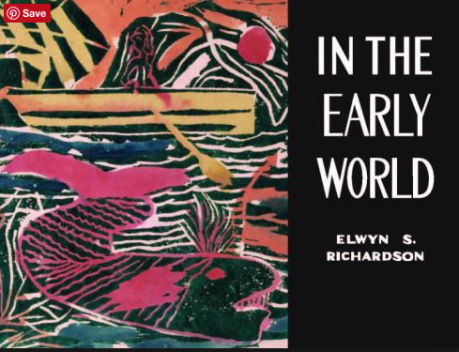
Elwyn S. Richardson's In The Early World
Joseph Featherstone’s Schools Where Children Learn highlights the work of Elwyn Richardson in northern New Zealand. Featherstone suggests that In The Early World may be the best book about teaching ever written. Certainly it’s one of the most beautifully designed. Reproductions of children’s art of an astonishing quality fill its pages – wood and linoleum cuts, pottery, and fabrics, as well as writing.
Featherstone reflects that it takes time for the reader to understand that a long account of how the class took up pottery is meant to be emblematic of a whole style of teaching. Clay of various grades lay in deposits near the school, and Richardson and the children tested samples to see which kinds were good to work with. They built a small brick kiln and pottery became the standard activity in the school.
Messing around, the children slowly learned the limits of the material – you couldn’t build wet clay too high or it would collapse.
Pottery grew into writing deeply influenced by the natural world surrounding the school.
The pine tree stands
With cracked sooted arms
With stumped branches
Rotted into the ground
With cracked sooted arms
With stumped branches
Rotted into the ground
Richardson’s testimony on the work: I saw that I had to teach as much as I could when opportunities arose, and that this was a better kind of teaching than I had known when I was following through topic after topic. If I did not teach at such times, the work became poor and lifeless….The series of developments taught me too, that I must use environment to the full and encourage individual expression rather than class. This meant more individual and small group observation.
Elwyn S. Richardson, In The Early World, Pantheon Books @ 1964.

https://youtu.be/7v2IeWIr2A8
Monday, December 05, 2016
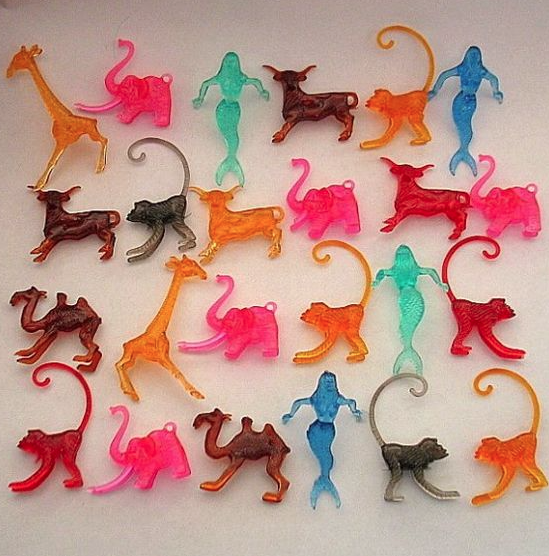
Community School Learns To Build & Display Collections
Subscribe to:
Posts (Atom)